Probability in Board Games: How to Use Math to Your Advantage

Probability in Board Games: How to Use Math to Your Advantage
When you sit down at a gaming table—whether it’s blackjack, roulette, or poker—it’s easy to think that everything comes down to luck. But behind every roll of the dice and every card turned lies a pattern that math can help you understand. Probability isn’t just for statisticians—it’s a tool you can use to make smarter decisions and improve your chances of winning.
What Is Probability—and Why Does It Matter?
Probability is about measuring how likely it is that a certain event will happen. In board and casino games, that means you can calculate how often a particular outcome will occur over time.
For example, when you roll a standard six-sided die, there are six possible outcomes, and the chance of rolling a six is 1 in 6—or about 16.7%. That may sound simple, but the same logic applies to much more complex games.
By understanding the probabilities behind a game, you can avoid betting on outcomes that almost never happen and instead focus on the choices that give you the best expected return.
Roulette: A Game of Fixed Odds
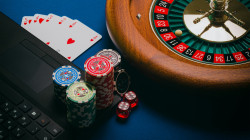
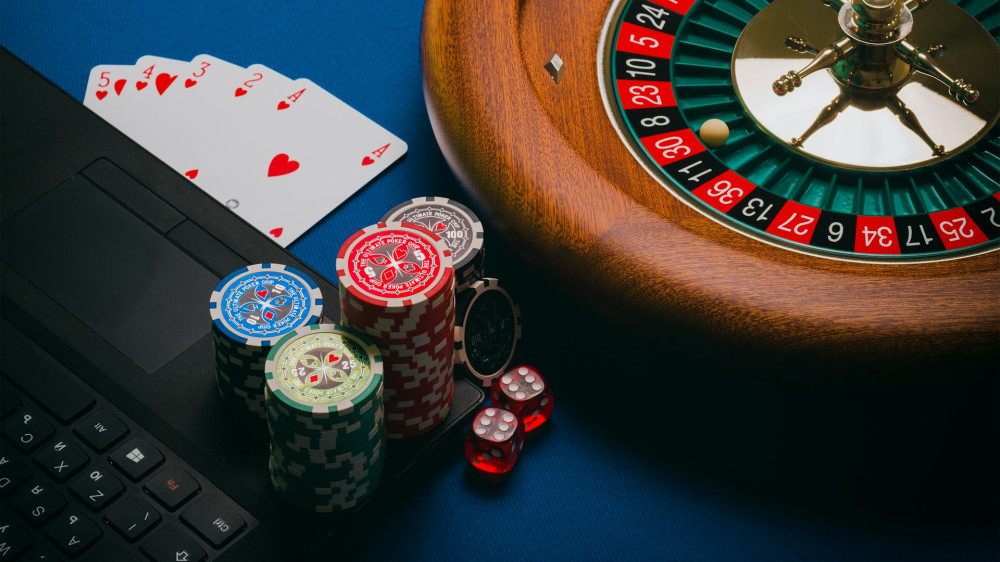
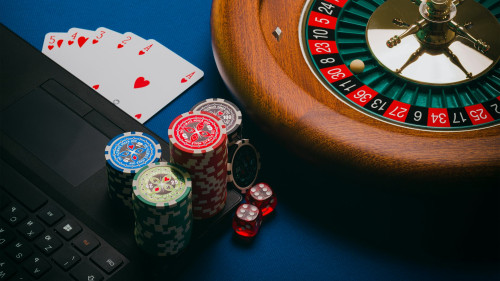
Roulette is a classic example of a game with clearly defined probabilities. In American roulette, the wheel has 38 slots (numbers 1–36, plus 0 and 00). If you bet on a single number, your chance of winning is 1 in 38. If you win, you’re paid 35 to 1.
That means the house always has a small advantage—about 5.26% in American roulette. This is known as the house edge, and it’s the margin that ensures the casino wins in the long run.
As a player, you can’t change the odds, but you can choose bets where the house edge is smallest. Simple bets like red/black or odd/even give you close to a 50% chance of winning—offering the best balance between risk and reward.
Læs også:
Blackjack: When Strategy Meets Probability
In blackjack, you’re not just playing against chance—you’re playing against the dealer’s hand. Here, probability can be used actively to make better decisions.
By knowing the likelihood that the next card will push you over 21, you can decide when it’s best to hit and when to stand. Experienced players use basic strategy charts, which are based on millions of simulated hands. These charts show the statistically best move in every possible situation.
While you can’t eliminate the house edge entirely, you can reduce it dramatically—from around 2% to less than 0.5%—simply by playing mathematically correct.
Poker: Probability and Psychology Working Together
Poker stands apart from most other table games because you’re playing against other people, not the house. Here, probability becomes a tool for assessing risk and potential.
When deciding whether to call, raise, or fold, you can calculate your pot odds—the ratio between how much you must bet and how much you stand to win.
For example, if you have a 20% chance of completing your hand but the pot offers you five times your bet, it’s mathematically a good decision to stay in the game.
The best poker players combine this mathematical understanding with the ability to read their opponents—a balance between numbers and intuition.
Myths and Misunderstandings About Luck
Many players fall for what’s known as the gambler’s fallacy—the belief that past outcomes affect future ones. If the roulette wheel has landed on black five times in a row, some players think red is “due.” In reality, each spin is independent, and the probability doesn’t change.
Understanding this principle is one of the keys to playing smart. Probability isn’t about predicting the next outcome—it’s about understanding how patterns emerge over time.
How to Use Math to Your Advantage
You can’t change the rules of the game, but you can change your approach. Here are a few simple principles:
- Know the odds – Learn the probabilities for the games you play.
- Choose games with a low house edge – Blackjack and baccarat are better bets than keno or slot machines.
- Play with strategy – Use basic strategy and pot odds where applicable.
- Think long-term – Short-term luck can be misleading, but math wins over time.
- Set limits – Probability is about rational choices, not chasing losses.
Using probability in board and casino games isn’t about removing the excitement—it’s about understanding it. When you know the numbers behind the game, you’re not just a lucky player—you’re a smart one.
Læs også: